Wednesday, April 25, 2012

My Children's World


I haven’t been blogging recently because of deadlines, but I read an article today that I thought was worth chewing over. It is entitled, The Curse of Chief Wahoo.


To begin: 

BACKGROUND POINT #1:  Anyone who has bothered reading my blog will already have figured out that I am a U.S. citizen of European decent. In other words, I’m so white, I’m practically transparent. My own diversity comes from the sheer quantity of different countries to which I can trace my lineage (I will spare you the enumeration). My children, on the other hand, have a lot more on their genetic plate, so to speak. In addition to the European Caucasia-palooza that I have passed on to them, they also have Mexican, Nicaraguan, and Native American bloodlines.

BACKGROUND POINT #2:  I currently live in Cleveland, Ohio, where baseball is a favorite sport and where the local team is the Cleveland Indians. The team’s logo is Chief Wahoo.


So that’s the background.

I am the first to admit that I didn’t always understand why Native Americans bothered to protest Chief Wahoo every year on Opening Day. I honestly didn't think it was a big deal. But then, when I was younger, I did not differentiate between races or creeds. I had never been taught that there were any differences between people based on the color of their skin or their cultural heritage. 

I was wrong. There ARE differences. The most glaring difference is that as an educated, middle-class white girl, I had no appreciation for what it felt like to be on the receiving end of another person's prejudice.

I never had to worry about being discriminated against when I was growing up. It was the 1970s and, while women were certainly still fighting for equal treatment, my own mother was a successful professional. Whatever the reality was for the rest of the nation, in my house, my gender was not a limiting factor. 

I was raised in the religion that was most dominant in my neighborhood. Even in my extended family, everyone was one version of Christian or another, so the concept of religious persecution was completely foreign to me.

Further, my family was financially comfy without being wealthy, so while I played with friends from both poorer and richer backgrounds, there was nothing to prompt me to notice one way or another.

In other words, my ignorance on the subject of discrimination stemmed directly from my ignorance of prejudice itself.

Of course, as I grew older, my innocence got banged up a bit and I eventually realized that there were some whack-jobs out there who really did think that skin color or gender or sexuality or religion were perfectly legitimate reasons to judge, hate, and even kill another person. I was completely flummoxed by this, and honestly still am.

Here’s what happened:

First, I befriended a girl in grammar school who was picked on mercilessly. She came from a particularly poor background, and our spoiled suburban classmates constantly tormented her for her lack of designer clothing and general polish.

Then, a boy in my class told me I was stupid because I was a girl. I must say that my reaction was not particularly mature, but he did eventually get off the floor and stop crying. Two words: saddle shoes.

Next, my teenage years brought me my first close friendships with people from non-Christian backgrounds. This marked the first time that my assumptions about religion were really challenged, but it was generally a very kind and gentle process, if occasionally a bit awkward.

I went on to college and eventually brought home a cute Hispanic boy to meet my parents. He was sweet and played guitar and sang me love songs in Spanish and was everything I hadn’t known I had been looking for, so I married him. 

Not long after we brought home our first baby from the hospital, I had one of those defining moments when everything shifts. After observing a group of Hispanic men walk past, an acquaintance of mine turned to me and said, “I hate Mexicans.”

Blink. Blink. What?

Excuse me - that’s MY CHILD you just spewed blind hatred at!

So back to Chief Wahoo.

It’s just a baseball team logo. Does it matter enough to make a fuss over? 

In the article, Marjorie Villafane, a Sioux, is quoted as saying: "I'm here so my grandchildren can be proud of their heritage. People act like we're trying to take their baseball away from them, but we're not. It's just, why do they have to turn us into Chief Wahoo?"

Here’s what I have to say about this: 

It absolutely matters.

Chief Wahoo is a logo. It is a marketing gimmick. It is used for entertainment purposes. It could be replaced.

My children are unique and wonderful. They are human beings who have the innate right to feel proud of their heritage. They are individuals who deserve to have their bloodlines treated with the same respect as any others. They ABSOLUTELY deserve not to be judged negatively for the color of their skin or their cultural heritage. And what my children deserve is what all children deserve – the chance to grow up and learn about your family background and feel proud of where you come from.

As pretty much the entire planet has realized by now, there are MANY, MANY, MANY things wrong with prevailing attitudes in the United States. One of those things is the sad truth that a cartoon created to promote a group of overpaid men in tights who hit balls with wooden sticks is seen as more important than an entire population of indigenous people who only want to see their children walk tall. And that makes so little sense that I can’t even begin to reason it out.

I'm sad that I have to raise my children in a world in which they will be valued less than a baseball mascot. All I can do to fight that, however, is to raise my boys to change the world and hope that my children's world will someday be a better place.
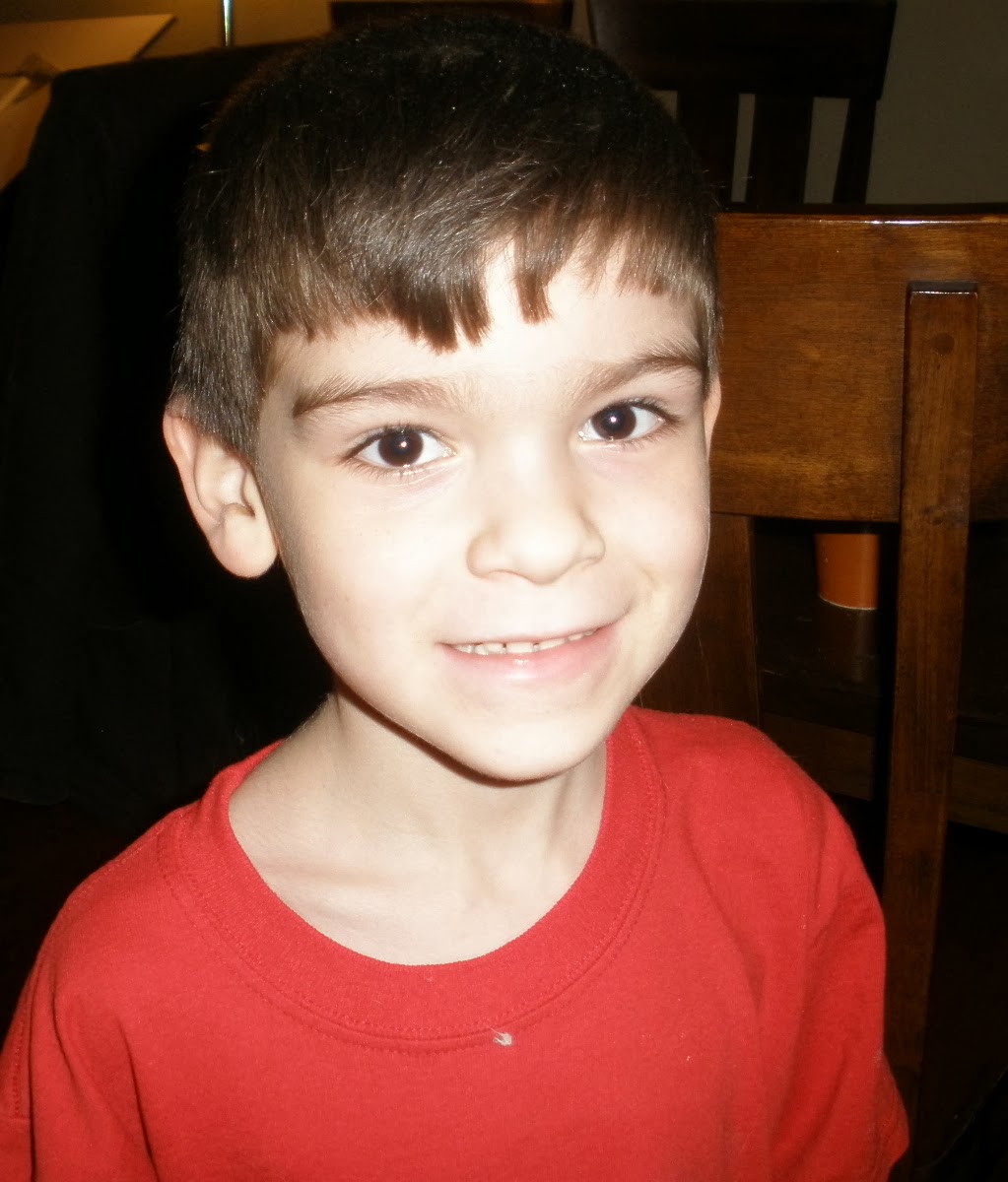

Momma says I'm more important than baseball.

Saturday, March 17, 2012

More of a Project Pony than a Plot Bunny


So I have gotten nothing accomplished recently. This is very frustrating for me, since I had planned to have taken over at least a portion of the world by now.

Since my world domination plans need to be readjusted, I thought I’d take a few minutes to write another blog post.

The reason I am so behind schedule is simple. If David Tennant had had the decency to be a lousy Doctor Who, then I wouldn’t have gotten sucked in to watching the last six seasons on Netflix. My children then got sucked in themselves because they’re nosy little things who always have to know what I’m watching; in the interest of family togetherness, I was practically forced to watch all six seasons all over again with them at their insistence. Then we started watching the classic series from my childhood. My youngest son has named Tom Baker the “Disco Doctor,” and my teenager is completely appalled at what passed for special effects back in the day.

We all loved Christopher Eccleston, of course, but it was David Tennant who really captured my boys’ hearts. Of course, he compounded this sin by being charming in interviews, witty on British television programs, and having the audacity to continue acting in other roles in a generally talented and engaging manner. So, David, if you’re out there – my schedule is shot to hell, and it is entirely your fault. Hang your head in shame.


One of the programs Mr. Tennant did as part of his evil campaign to turn my calendar into an absolute mess was called “Who Do You Think You Are?” His bit was “So You Think I’m Scottish?” This program interested me for several reasons, the first being that I dearly love a good story, and generally you get a good story if you dig into your family background as he was doing. It was also an excellent way to teach my boys a bit about their own heritage and give them a sense that they are here today because of the countless choices and challenges in their ancestors’ lives.

What grabbed my interest in particular when watching this program was the idea that what we consider “history” really happened to people and that events like the Clearances in Scotland, the Troubles in Northern Ireland, and countless other significant points in time that we study at school directly impacted who we were destined to become. For example, had my own ancestors not been religious dissenters, they would not have hopped on the Mayflower. Who would I have been then? Well, that's easy - I would never have existed, since the intermarriage between other nationalities that has gone on in my family tree since we set foot on Plymouth Rock would never have happened. In fact, I have so many different nationalities in my background that my children tend to refer to my side of the family as simply “European.” At any rate, when you look back at a specific person from your family tree and learn about who they were and what their life was like, it brings their humanity into sharp relief, and you begin to see them as a fully three-dimensional human being, which in turn gives you unexpected insight into the person you are.

So I was thinking about this in terms of my writing and the creation of fully-actualized characters. I do become impatient with books that give the protagonists one central idea that motivates and informs all of their decisions and actions throughout the story; to me, that seems to be over-simplifying how people work. If writers could “discover” their characters in much the same way we learn about our ancestors through research and legwork, I think that it would make for much more dramatic and believable characterizations. I know that all writers work differently, and so I can only speak for myself. Generally, I will get a plot idea and develop it in my head before creating characters to fill the various necessary roles within the story. But what would happen if I constructed the person before I constructed the plot? How would that impact the finished book?

One of my cousins has suggested that I should write the story of our family, particularly that of our grandparents. I have shied away from tackling this project in the past because I really could not figure out how to even begin, but now that rascally David Tennant has given me an idea. As my fellow novelists know, an idea is a very, very dangerous thing in an imaginative mind. I have some other pieces that are currently in progress and must be completed, but once those are taken care of, I am considering tackling a new project based on the idea of a story driven entirely by history rather than characters bending to the will of the plot. I think this might make for an interesting string of blog entries as well. Guess we’ll have to wait and see! If it results in anything worth publishing, I’ll have to dedicate it to Mr. Tennant.

That little troublemaker.

Wednesday, February 29, 2012

The Voices are Talking Again


One of the most irritating pieces of advice I have received on writing is that I need to “find my voice.” No one has ever come up with a satisfactory explanation of what that phrase really means, and yet it’s absolutely true. So I’ve decided to blather about it for a bit.

I think it’s a pretty well-established fact that an author is most successful when writing within the genre that he or she most enjoys reading. This is an easy idea to grasp; you like gory murder mysteries, you should write gory murder mysteries. Simple.

And then someone slaps you upside the head with the whole “find your voice” speech, which simultaneously seeks to help your development as a writer and also throws a gigantic, amorphous roadblock in your path. (If you’ve never had this experience, yay for you. A lot of us have, though, so you’ll just have to trust me on this.)

Something I have in common with a lot of authors out there is that I enjoy reading books from different genres, so beyond narrowing down the sort of book I should write, that indicator doesn’t help me much. Even when you have picked out a particular genre, that still doesn’t give any indication of the sort of voice you’re going to use. Will you be funny? Dry? Bitter? Clinical? Flowery? Passionate? Sarcastic? Even when told in the third person, a book takes on a certain voice that sets the tone for both the story itself as well as how events will be presented to and received by the reader. I could tell you the story of Red Riding Hood, for example, in a way that was humorous or in a way that was darkly suspenseful. The voice of the story has a huge impact on the success of a novel, and finding the voice that works best for you is crucial.

I write romances that tend to incorporate paranormal or mystery themes, but I have written a fin de siècle novel that is deadly serious and uses tons of really big words, as well. It was fun to write, but I don’t think I could do novel after novel in that voice. I just don’t take myself seriously enough. I have also written a more “traditional” romance along the lines of a mainstream Harlequin, but I got bored by the end and slapped a marriage proposal on it and called it finished. And therein lay the clues to my “true” voice.

My current work-in-progress is an absolutely crazy, anything-goes romance that relies heavily on humor, sarcasm, and wit. It’s not any easier to write than my other novels were, but it does feel more natural. I enjoy knowing that the insane ideas or quirky bits of dialogue that pop into my head can actually be incorporated into the story, for one thing. For another, it is much more in keeping with my personality. What makes me (or any other writer) able to produce new stories, ideas, and characters is my unique point of view. What I see when I watch people interact or how I react when something happens around me is completely different from how another person would.

So what do you do when someone tells you to find your voice? Go to the local Voices-R-Us superstore and pick out one that looks pretty? Often, there’s nothing to help you except trial-and-error, which is my least favorite way to learn things. The error part really sucks.

How did find my voice?

One day, some unfortunate soul had made the mistake of asking me how I was. I love this question, because to my mind, this is an invitation to tell a story. As I launched merrily into an extremely tongue-in-cheek account of my trip to the grocery store and how I believe that the incident with the kiwi fruit was a clear indicator that ninja squirrels were out to get me, I realized that humor was the way to go.

I went home and gave it a try. I liked it. And the rest is history.

Which is not to say that my other voices (in a strictly non-multiple-personality sense) have been kicked to the curb – or kerb, if you’re in Great Britain. I’ve still got those other voices inside me, but they’ll be special little treats for when I need a break from the serious task of snark production.

In the interests of marketability, one probably should stop and consider that an author needs to build up a readership. That readership might get a tad cheesed off if the author has some sort of psychotic break and writes a novel in a completely different voice. So if you want to explore more than one voice, and your options are rather extreme in their differences (as mine are), I will just remind you that there are these wonderful things called pen names that can help you organize your different writing “personalities.” Think of it as The Three Faces of Eve, except with editors. And less makeup. And you probably won’t win an Oscar, but hey, you never know!

And really – it’s 2012. With Internet and e-books and a thriving indie writer community, the publishing world is your oyster... or we’re careening toward Armageddon (though we’ve still got a few months left, I’m told). If you want to write each book in a completely different voice, why not go for it?

Write what you enjoy.

Tuesday, February 7, 2012

The Real Life of a Freelance Author


So a lot of my friends and family (and random people on the street) have told me they envy me because I get to work from home. I get to write all day – just spend countless carefree hours imagining different people and places and bringing those dreams to life. Yes, I get to spend oodles of quality time with my children, be my own boss, and slack off whenever I damn well please. A life of personal fulfillment and freedom to do whatever I want, whenever I want.

Yeah, about that…

Here’s the reality. Today I woke up at 6:00 a.m. (ish), pried my teenager out of bed, threw clothes at the teenager, peeled 2nd grader off the floor (don’t ask), threw clothes at the 2nd grader, made coffee, made lunches, kissed hubs and teenager goodbye, threw clothes at myself, fed 2nd grader and cats breakfast, entered missing advancement information into Scout online advancement system, tallied awards needed, created spreadsheet for Pinewood Derby kit distribution, checked my email, and dropped off 2nd grader at school. AND THEN I drove downtown to the Scout Shop, spent half an hour registering new Scouts, picking up Pinewood Derby kits, and pulling the various awards that the online advancement system said I needed. AND THEN I drove to the Cub Scout pack’s bank to make a deposit. AND THEN I drove home, drafted a contract, emailed various Scout leaders and parents with questions and clarifications, emailed all Scout leaders about meeting agenda items, discussed leadership continuity with the Cubmaster, and discussed contract matters with a publishing house. AND THEN I picked up the teenager, ordered trophies for Pinewood Derby, sent my zillionth text to my committee, came home, did homework with the 2nd grader, waded through all the awards I’d purchased and divided them by den and Scout, texted missing awards for my husband to pick up on his way home, ordered a pizza, and fed the cats.

In a few minutes, I’ll have to inhale some food, change into my leader uniform, and run to the Scout meeting.

See any writing in there? No? Hmm…

Oh, thank heaven the pizza just showed up!

Friday, February 3, 2012

The Merits of Subtlety


I fretted over posting this for some time because I don’t want to inadvertently offend anyone, but I think there are points worth making here. However, I would like to begin with a little disclaimer that this is truly based on an amalgamation of some of the books I’ve read recently and is in no way a pointed attack on any particular author. None of these comments are inspired by a specific book or writing style, and I sincerely hope that my comments will be taken in the spirit in which they were intended. As I mention in this post, I myself am guilty of all of the missteps I’ve outlined, so I am throwing rocks at my own glass house by sharing this. 

So here goes. Gulp.

***

As I have begun wading into the pool of self-publishing, I have been doing a lot of reading to gauge the sort of sharks I’ll be swimming with. After all, we all benefit from sharing our experiences and learning from each other. Self-publishers do have a central weakness: the lack of a professional editor. Yes, we have access to paid services, but in many ways these do not provide the hyper-critical laser beam focus that a publishing house’s editorial staff would provide. Certainly, a paid service will make sure you don’t mix up “accept” and “except” or “past” and “passed,” but their job is not to tell you that your plot is clichéd or that your main character would benefit from a frontal lobotomy. This opens the door to a host of common problems in self-published novels, and these problems do tend to impact the success of independent authors as a whole, although nowhere near to the same extent they once did.

The majority of my reading has been romance novels incorporating a mystery, a paranormal slant, or both, so my comments are definitely directed primarily to those genres. As a compulsive reader, it takes a lot for me to walk away from a book without finishing it. I mean, I read cereal boxes. For entertainment. Including the list of ingredients. If a novel is too painful for me to finish, this is a really bad sign. Unfortunately, the frequency with which I have done this has increased dramatically since I began specifically reading self-published books.

In my recent reading, one overwhelming detail that I have noticed is that writers often fall into the trap of heavy-handed narratives, practically beating their readers over the head with their characters’ emotions. This error is further compounded by over-used devices like the wisdom-spouting stranger, the psychological profile from a close friend/family member/bartender, and the grand romantic gesture. I’ve committed all these sins myself. So how do we recognize the pitfalls so we don’t fall in? 

Know your enemy!

***

Since I don’t want to quote anyone in particular and then have them come after me with torches and pitchforks, I shall create over-the-top faux examples of each common boo-boo.

1) The “Strong” Heroine Who Cries

Example:

“My grandfather died twenty years ago,” I whispered, my eyes filling with tears. They quickly spilled over as I continued, “He was killed in a freak Zamboni accident during an earthquake right after I lost my parents to freedom fighters from North Dakota. I miss him so much every day, but I know he would have wanted me to go on. So I have continued to pursue my dream of becoming the first macramé artist in space in honor of him and everything he taught me.”

“Flexis, you are the strongest woman I’ve ever met,” Stud said, gripping my arms in hands that shook with repressed emotion.

Commentary:

A character’s back story can be sad without tears, and if you want inner strength and fortitude in your heroine, having her cry over her misfortunes is not the way to achieve it. This is especially true when the past misfortune happened so long ago that any normal person would be able to at least relate the story without tearing up. Also, strong female characters do not cry every time they receive bad or even confusing news. She never knew her family secret? Okay, have her be concerned, muddled, upset, impatient, or questioning… but don’t have her blub about it like an infant and then turn around and call her strong.

2) The Amateur Shrink/Dr. Phil Wannabe

Example:

“He won’t let anyone get close to him ever since his cat died in Afghanistan. And then when our mom joined the circus train, it just reinforced his lack of faith in relationships. But a good woman would make him see the light,” Dirk’s sister said, spastically winking as she nudged me repeatedly with her elbow.

Commentary:

If someone starts talking to me like this, they’re usually drunk.

3) The Flouncer

Example:

I couldn’t believe my eyes. There he was, tossing a salad in my kitchen as if he had the right! It was a clear message to me that he would never take me as seriously as Suzanna, who would have been able to master the fine art of salad preparation. And to make his point with salad, knowing as he did that my own mother was killed while standing at a salad bar! How had I ever thought I could love this man? Furious, I turned on my heel and stormed out of the apartment, getting in my car and driving away in a cloud of dust. If I never saw him again, it would be too soon.

Commentary:

The overreaction doesn’t make this moment more dramatic – it just makes the heroine sound like a freaking lunatic. When the man (inevitably) goes after her to apologize for his salad insensitivity, I always want to smack him for not recognizing a blessing when he sees one. I wouldn’t wish that kind of a relationship on anyone. Also, if you want your readers to take a romantic relationship seriously, please don’t use the old “had they just communicated with each other” device to bring tension. Judging someone you supposedly love without talking to them and giving them a chance to respond really doesn’t sound like love. It sounds like high school.

4) The Egotistical Wallflower

Example:

I was shocked that he even looked at me twice. There was nothing special about me. My glossy, chestnut hair fell in long waves down my back, my skin had the delicate translucence of a Spring rose, and my eyes were a cold fire of gold and green. And yet Ethan had called me beautiful. It didn’t make sense. What was he seeing that I didn’t?

Commentary:

First of all, ever since Twilight became popular, the number of romantic heroines whose skin is described as “translucent” has reached truly ridiculous proportions. I get the lure of pale skin in a vampire novel, I do – but for the love of all that’s good in the world, PLEASE invest in a thesaurus. Second, if your heroine has a poor self-image, low self-esteem, or a lack of self-confidence, that’s fine – just try to make her not sound like she’s trying to hump her own leg while protesting that she’s ugly. If you want to show that she’s really beautiful and can’t see it, that’s why God made things like other characters and dialog. Just saying.

***

I could go on and on, but I’ve exceeded my rant quota for the day, so I’ll wrap this up. 

Think about the books you love: the ones that capture your imagination; make your heart go pitty-pat; or bring tears to your eyes. Think about the scenes that touch you most, and I can guarantee you that they all have one thing in common. Subtlety. Just a word or a phrase that hints at the underlying emotion or internal struggle. That’s all that’s needed. No long-winded explanations that make it impossible for the reader to feel any suspense or tension. Write what engages you – which isn’t the images running around in your head as you read. Look at the actual passages you respond to as opposed to the mental pictures you’ve painted, and hopefully you’ll see what I mean. 

And if not, I’ll be up late, watching for torchlight reflecting off your pitchforks.

Wednesday, February 1, 2012

Mini-Rant #1

Dear Indie Authors:

Please stop posting poorly written summaries when e-publishing your books. Every time I see a blurb written with poor grammar, I want to hunt you down and slap you silly with overcooked linguine. If you expect consumers to take a chance on your book, you might want to start off by giving them the impression that you have, in fact, mastered the English language.

Sincerely,

Me

Friday, January 13, 2012

The Perils of Indecisiveness


I have been diligently chewing over an array of ideas for my next blog post, but I have been unable to commit to one. So we’re going to go with the theme “Inability to Commit.”

My inability to make a decision and stick with it is the only reason I haven’t gotten a tattoo. I exercise woman’s prerogative to change her mind more diligently than I should, and there isn’t an element of life in existence that I can’t over-think. I can’t even park the car at Target without calculating exit strategies and traffic patterns and cart return techniques. It’s a little scary.

I was one of those “cradle novelists” – people so driven to write that they begin creating stories before they’ve even learned their alphabet. So why did it take me all these years to finally pursue that drive to create?

Even when it is, figuratively speaking, “true love” and you know to the bottom of your soul that it is all that you really want, it is an incredibly difficult path to choose. Teachers, parents, friends, strangers on the bus… they will all tell you, “Hey, that’s great that you want to be a novelist. But it’s really hard to get published, let alone make a living off of it. You need to figure out what you’re going to do to pay the bills.” They’re not wrong, exactly, but this advice comes with a very pernicious subliminal message: writing is a hobby to do in your spare time, not a career.

And so begins the gradual erosion of confidence. The thinking that you cannot choose to be a professional writer leads to the conviction that you lack sufficient skill to be one of the hallowed few to actually become successful authors. This then leads you to the sneaking suspicion that you are actually a talentless hack.

Next thing you know, you’re working as a paralegal, proofreading patent applications for toilet seats.

Scary, huh?

If someone had said to me all those years ago, “Hey, maybe you should just give it a shot before you’ve got kids and a mortgage and all that,” would I have had the courage to try? I have no way of knowing. Nor do I even necessarily believe that it would have been the best choice to make. Even successful authors discourage would-be writers from trying to live off their writing alone.

What my experiences did prove to me is that if you cannot make a choice – if you float through life just taking the path of least resistance – you will never achieve your true goals. At some point, you have to stand up and say “no” to the people in your life – the family, friends, and coworkers who push you into things you don’t really want for yourself. You have to stand in your truth, which means committing to yourself.

It’s a little sad that committing to yourself is harder than committing to another person. I was 100% more terrified of taking the plunge and really trying to succeed as an author than I was of walking down the aisle and pledging to spend the rest of my life with this really cute boy I met at college. And the commitment is key.

Whether you have a day job or not, you absolutely MUST commit yourself to your writing if you wish to succeed. You cannot finish a novel, edit it thoroughly, find an agent and publisher, or self-publish without that commitment. This is not a hobby like knitting – you can’t set your project aside until you have a long weekend or a vacation. This is a career that can coexist with other careers, but it is a career nonetheless. You wouldn’t call your boss and say, “Hey, I’m not going to work for a couple months because I’ve just got too much other stuff going on.” To become an author, you have to treat your writing with the same level of dedication and respect that you would give to an office job. If your work ethic would get you fired from a traditional job, then you won’t succeed at writing either.

Set hours for yourself – create deadlines. Commit to your writing if you want to actually succeed.