Sunday, June 30, 2013

So I've started doing flash fiction...

Flash fiction is one of those things that makes me feel like the hopeless old lady trying to understand how the Internet works. It's a new thing for me, and I have approached it with a certain measure of wariness. However, my hipper colleagues have encouraged me to give it a shot. I've now done a couple of these, and I thought I'd share them with the five people who read my blog.

#1) Photograph


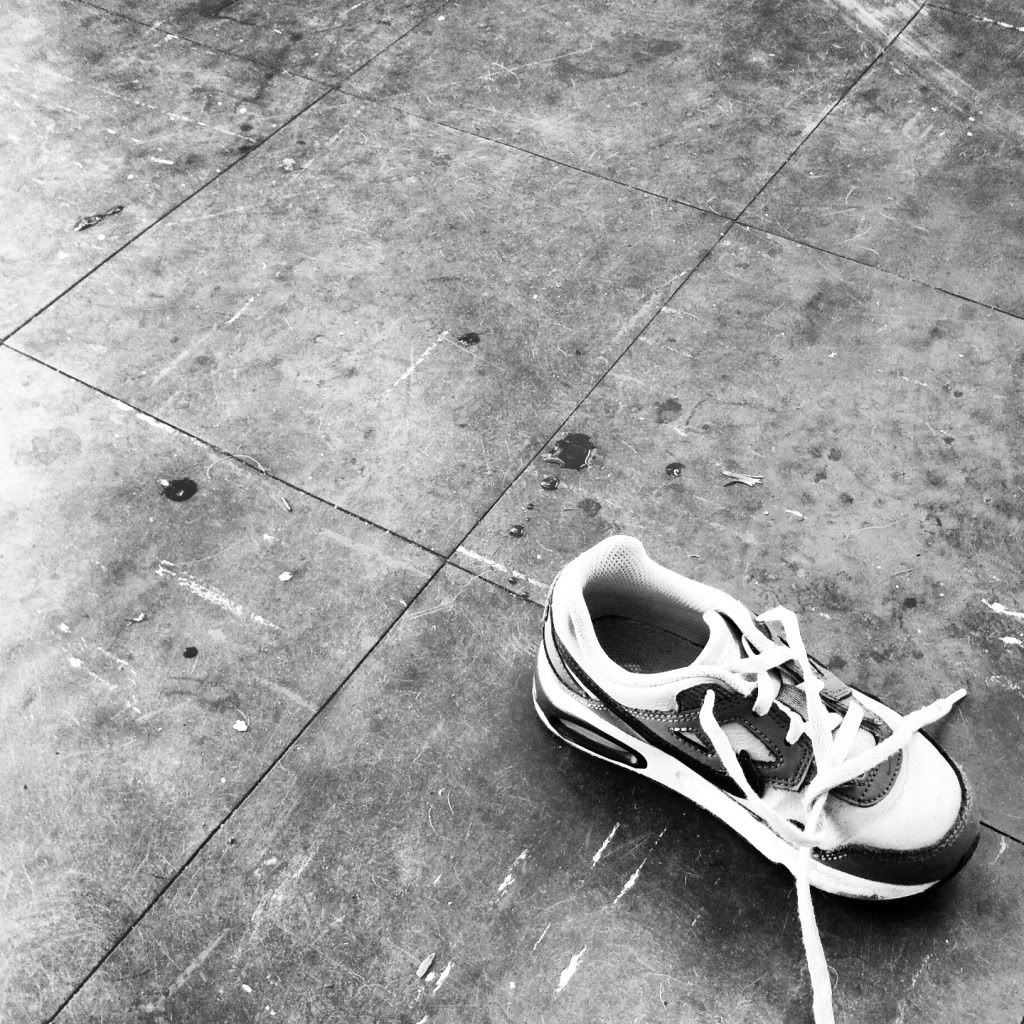
When she walked through the empty house, ghosts walked with her and whispered to her of happy days and perseverance and that subtle untouchable quality of moments only imagined. You could never know whether the lives within these old walls were good ones. Did they love each other? Was there music? And who picked out this linoleum and said: This is what I want my children’s feet to walk across. Because she knew there had been children. There, in a dusty corner, a forgotten shoe lay like an abandoned daydream. The child who had fumbled to tie the sodden laces was long gone. He might be all grown up by now, with a home and a child and linoleum of his own. Perhaps his memories of life in this house were nothing but faded blurs, like photographs left in the sun. Or perhaps he chose not to remember because sometimes the past hurts too much. She was here now in his place, and although the rooms were empty and echoing, she felt like an intruder. The sounds of her progress through these forgotten spaces were loud in the stillness, making her intrusion as harsh and unnatural as a barrage from invading cannons. It felt wrong to be here, but this place was hers. She could either claim it and erase the dim echoes with curtains and carpets, or she could surrender it to the hours and years, this place would molder and rot and crumble until, forgotten by the world – even forgotten by its ghosts – it was erased from the world entirely. Maudlin thoughts on such a day. A stranger had died, and now she stood in a home that was not hers. The ghosts within this space were not her own. She left the child’s shoe on the ground. (14 June 2013)


#2) "Smile like you mean it" - The Killers


                “You don’t have to buy it. You just have to sell it,” the director reminded us.
                It should have been so simple to imbue a feeling of heartache and remorse to the piece he’d selected. It was a requiem – a general gnashing of teeth before a divine entity that I neither believed in nor wanted to envision. Wasn’t death enough heartache without comforting the bereaved with assurances of heavenly judgment and retribution? I just couldn’t understand the appeal.
                Still, there was something attractive about the wild despair of the music. I couldn’t deny it. It was appealing in a disturbing way, that self-indulgent breast-beating and keening spectacle. A requiem. Such power, and such helplessness. The staggering fear that accompanies our inevitable ends and the unknown chasm that awaits us. That was not a difficult emotion to capture or communicate.
                The faith was the problem. That trembling, fervent belief that Jehovah would ride a flaming chariot over the souls of the departed and somehow cast them down even more. Eternal damnation and eternal salvation were too strange for me to grasp. Did fear of death translate automatically to fear of all that was unknown about the afterwards? Could any choir sing of salvation in such terrible octaves of joy and terror and somehow mean it?
                The requiem ended with a benevolent whisper – a promise of release from care and pain. This was the hardest part. More than kettle drum booming and trembling soprano cries, it was the message of forgiveness and love that tripped me up most. This was where faith was hardest. Could I believe that death brought such ecstatic bliss? Could I bring that quiet assurance to an audience with any real feeling?
                “Smile like you mean it,” the director commanded. So I did.(30 June 2013)

Friday, May 24, 2013

Deep Thoughts about Bread and Toothpaste


During the week, I am the designated school lunch preparer. I construct multiple peanut butter-and-jelly sandwiches like a ninja, even before the coffee is done brewing. However, the weekends are a different matter. My sons tend to help themselves to the bread, making my ninja-like skills unnecessary. So it sometimes happens that on Friday I am left with a heel from the old loaf of bread. I know better than to expect two boys to voluntarily consume this universally-unappreciated portion of the loaf, and I cannot force it on them since it will be a fibrous rock by the time I make another sandwich. What we do in that case is break it up and put the crumbs in the birdfeeder.

I do have a point. Stay with me.

Today was one of those Fridays. I was sitting at the front window inhaling my first cup of coffee, and I watched the birds come and take small hunks of bread from the feeder. One little bird would land, take a piece, and then fly away home, leaving the rest for the others. And then (because it was my first cup of coffee, so I was feeling all broody), I started to reflect on Nature and honoring our blessings.

Today is also my seventeenth wedding anniversary, and this date always makes me think about the small quirks of my marriage that make my relationship with my husband so fun. One of our longest-standing battles is the toothpaste tube. He is firmly in the “squeeze that sucker from the middle like a boss” camp, whereas I, the daughter of a man who still acts like it’s the Depression, am a big believer in squeezing from the end and meticulously folding the end of the tube as you go. Someone once asked me why we were still having skirmishes over this admittedly minor philosophical point, particularly since I myself did not grow up during the Depression and have no compelling reason to care if some toothpaste was wasted through haphazard squeezage.

EXHIBIT A

Here’s my point now.

Where do we draw the line on wastefulness? When we have an abundance of any particular thing, should we honor that blessing by taking care of it and using it responsibly and conscientiously, or does that sort of thinking only apply to big-ticket items? When I have clothing I cannot use anymore, I will donate what I can to charity or repurpose the fabric. When my kids have toys and books they no longer use, I pass them on to my friends’ children. When we have leftover dinner, I put it in the fridge to eat later. But all these things – clothes, toys, books, and food – cost a lot of money. It’s easy to be careful about waste when it takes some of the strain off your bank account. What happens when finances are not a consideration?

Whether it’s toothpaste or bread or love or family, I think we all tend to be irresponsible about the blessings in our lives. The birds outside take the bread they need today, but you won’t see one bird hoarding bread and keeping it from the other birds. There isn’t a nest filled with stale, sodden crusts that are no longer edible because the nest’s owner took more than it needed to sustain itself. Birds don’t waste their blessings that way. However, human beings do. We fill our homes with things we don’t need, “just in case,” while we waste necessary staples. We neglect our friendships and relatives but spend a ridiculous amount of energy on people who don’t deserve it. When we have an abundance of something, we become careless rather than generous.

The Depression might be just a page in history now, but I think that the lesson it taught about honoring every small blessing should not be forgotten. Don’t throw away things – or people – carelessly. The day may come when you need a friend but can’t find one. Someday you may need to brush your teeth, but the tube is too mangled to get any toothpaste out. Think about what you have and be grateful for it. And make sure to leave some bread for the other birds.

I have long since surrendered to my husband’s manly toothpaste squeezing. I never find the seat up in the middle of the night, so it’s a concession I’m willing to make. Besides, as blessings go, my husband is far more important to me than a neatly-rolled toothpaste tube.

Monday, May 13, 2013

Reprint: Interview with Mich's Book Reviews Blog


I'm still shamelessly recycling while I finish up a couple of projects. This is an interview that was originally posted on September 20, 2012, on Mich's Book Reviews blog in support of my release of "My Apple Tree." I'm providing the link to the original posting below; I encourage you to check out her blog for other reviews and author interviews!


Firstly, tell me a little about yourself...

I was born (obviously) in a university town in Kansas, which is where much of my extended family still lives. After moving around a bit, my parents and I ended up in Cleveland, Ohio. I got married soon after college and brought my husband back with me. We now have two sons, three cats, one mortgage, two coffee makers, and enough dust bunnies to repopulate a planet.

1) How did you start writing?

I don’t really remember a time when I wasn’t writing. I remember hiding under my bed and drawing the stories in my head since I didn’t know the alphabet yet. In college, I majored in English literature, but every adult around me insisted that there was no way I was going to be able to pursue a career as a professor or writer if I wanted to eat regularly. Eventually, I became a paralegal specializing in Intellectual Property law, but I left to stay at home shortly after my oldest child was diagnosed with Aspergers Syndrome, which is on the Autism spectrum. While I was still working, I continued to write, but it wasn’t until I became a stay-at-home mom that I dared to consider pursuing writing as a career.

2) I know you also work with [Renaissance Romance Publishing] as editor in chief, how do you juggle this and being a freelance writer?

As with any job, there are times of frantic activity and periods of calm between the storms. I don’t know a single working mother who doesn’t struggle with balance to begin with, so I’ve become somewhat accustomed to being pulled in several different directions at once. I do try to avoid working on my own writing while in the middle of editing someone else’s manuscript. It’s important not to let the line between editing and rewriting get blurred. If I’m in “writing mode,” I will want to change someone else’s writing to match mine, and that’s not what I’m there to do. I do have plenty of support from RenRom itself – we have a wonderful team of people who are willing to jump in and help if things need to be juggled. I also disappear for the month of November to participate in National Novel Writing Month, or NaNoWriMo, which involves a worldwide challenge to write 50,000 words in thirty days. My longer works in progress came out of past years’ projects, and it certainly is my most prolific writing period. In a nutshell, if I’m not editing, I’m writing – but I’m always doing one or the other.


3) Where did the inspiration for My Apple Tree

My Apple Tree is a story I began several years ago, and it has evolved a lot since the original draft, much like an old house that has had wings and extensions added to it as the years pass. The story of young lovers torn apart is the earliest portion and was inspired by Sinead O’Connor’s version of the Celtic ballad “I am Stretched on Your Grave,” which appeared on her album I Do Not Want What I Haven’t Got. It is a beautiful and haunting song, and it’s hard not to listen to it and not see the young lovers in your mind’s eye. At first, I had no plans to develop my story beyond that, but some other influences gradually mixed themselves in. Hope began to emerge, and what was once a story of heartbreak and despair became something more as the characters took on a mind of their own and sought out love and healing. When I went to visit family last May in Joplin, Missouri, and saw the damage from the tornado that had torn apart that community one year earlier, the last piece fell into place. Hopefully, the end product is an honest and faithful portrait of grief, healing, and the importance of the life-affirming influence of love in our lives.

4) Do you have any projects in the pipeline that you can speak about?

I have two novels currently at different stages of completion, which is a nice way of saying that I will be monkeying with them until someone from RenRom comes and forcibly drags the manuscripts away from me. One is an historical romance titled The Truth Seekers, which takes place at the turn of the century and deals with the friendship that springs up between a society daughter and a misanthropic, cynical gothic novelist. Because of its historical nature, working on it is a more delicate process, so I have a hard time anticipating when I’ll feel like it is fit for public consumption. Another novel, The Irrepressibles, is a contemporary mystery-romance with elements of the paranormal and comedy mixed in. It is more typical of my normal writing style, with wise-cracking lead characters and hilarity mixed in with the more serious feelings and dilemmas. At the moment, it’s in the stage known by professional writers as “a hot mess,” but I hope to finish work on it sometime in 2013.

5) Will you ever incorporate your love of Doctor Who with your writing?

Ooh, good question! Unfortunately, my answer has to be “yes and no.” Like the hopeless fangirl I am, I already know what is involved in writing an actual Doctor Who novel, and I’m not prepared to run that particular gauntlet. However, I have gotten flashes of inspiration from watching the show that exist now as random snippets and notes somewhere in the bowels of my laptop. David Tennant and Christopher Eccleston’s portrayals of the Doctor, in particular, are almost impossible NOT to be inspired by. In these days, it’s supremely important to avoid even a whisper of copyright infringement, so while I might get an idea that is triggered by a bit of one episode or another, you won’t be seeing any time-traveling aliens from me any time soon. I would love to write a novel that is good enough to get a film version starring David Tennant, but I’m not going to hold my breath for that one!

6) What's your least and most favourite aspects of the writing process?

I think my least favorite part of writing is the inner editor. The voice in the back of my mind that constantly pushes me to find better phrasing or improve characterizations won’t ever shut up long enough for me to just sit and relax and write. If my muse is the angel sitting on my shoulder, my inner editor is the devil perched on the other side. I think that’s why I tend to do my first-draft writing late at night or early in the morning when I’m not completely awake. When I’m totally alert, I’m second-guessing myself too much to get anything done. 

My favorite part would have to be what goes on in my mind’s eye as I get a new idea. I love seeing a scene play out unexpectedly in my head. It’s by far the best part of being a creative person – that vivid imagination that lets you really see the world you’re trying to recreate for your audience. It’s like magic.

7) What's your advice to prospective writers?

One piece of advice that I got and didn’t want is “Don’t quit your day job.” It’s not the idyllic life that we might imagine, surrounded by leather, grandfather clocks, and old books as we craft exquisite prose, unmolested by bill collectors, piles of dirty laundry, and children who for some unknown reason expect us to feed them on a fairly regular basis. We must all live in the real world at least some of the time, and there are many writers out there working in jobs they hate while they throw their hearts into their craft during free hours. The good news is that you need those experiences for your stories anyway. You can’t write about the human experience if you’re living in a bubble. 

Another piece of advice – and this really should be the most important – is that just because you love to write doesn’t mean you are naturally flawless. Learn about your art. READ STYLE BOOKS. Annie Dillard and Stephen King are two authors whose writing guides are particularly useful. Get a common English usage guide to answer your grammatical questions. Don’t wait for someone like me to take your baby away and cover it in red pen. Put the care and time into each manuscript that reflects your interest in telling the best possible story to your readers. The images live inside you –you must learn how to unlock them. As with any other creative endeavor like painting or music, writing is a craft that must be nurtured and honed and constantly improved. You’ll get a lot of advice you don’t want to hear, but you need to listen anyway.

Friday, April 26, 2013

Crazy Cat Lady in Training

So I was sitting around pondering life (a.k.a. ignoring my deadlines), and it struck me that I am probably going to die alone and surrounded by 20 scraggly cats. It’s okay; I’ve made my peace with it. At least I can start stocking up on canned cat food early.

Because here’s the thing. You people out there in the “real” world? You scare the hell out of me. Every year that passes only reinforces my reluctance to participate in “real” life. Have you seen the wars out there? The violence and hatred? The absolute and blatant hypocrisy of our governments and religions? Even on a smaller scale, the way we speak to each other and treat each other and judge each other is downright terrifying. What the hell is it all for?

Say you have an opinion. Let’s make it an easy one. Okay, you believe to the depths of your soul that the color pink is an abomination against all that is good in the world. There are arguments to support this belief, and all of it proves beyond doubt that pink as a color is wrong. Yay. You win. Pink is evil.

What does this accomplish, though? First off, anyone who likes pink now has to either hide their pink-appreciation or choose to pink it up anyway, knowing that everyone they meet – every person they encounter – will be silently judging their pinkness. So tensions escalate (as they so often do), and next thing you know, there is a pink-lovin’ faction that breaks off and tells the non-pinks that THEY are the heathens. So the non-pinks declare war on the pro-pinks – strictly for their own good, of course, misguided souls that they are. Now we have non’s and pro’s all fighting each other, and then someone finds a gun, and then another person revs up a few tanks and helicopters, and then the next thing you know, we’re killing each other over pink.

Maybe the pro-pinks win. Maybe the non-pinks win. Either way, one ideology will emerge victorious. People have died. Families have fractured. Lives have been torn apart. Over pink.

What has all this really accomplished? Not a damn thing. Because pink was never really an issue. Pink won’t keep us from achieving new advances in medicine. Pink won’t influence how our children learn and grow. Pink won’t prevent us from living, working, loving, praying, or eating. What has brought those restrictions and that suffering to people’s lives isn’t a color – it’s the prejudices that our society has built up around that color.

Religion. Sexuality. Gender. Class. Profession. Race. Size. Shape.

Hating and killing and tormenting each other over these things make just as much sense as having a war over the color of Pepto Bismol.

Don’t quote the Bible at me, either. Jesus said the MOST IMPORTANT thing was to love one another. He didn’t say it was something to consider when taking a break from Leviticus (which apparently never gets read unless someone wants to impose their prejudices and they need an excuse). He said it was the most important thing. Not maybe. So really, don’t call yourself a Christian and then ignore that. That’s like putting an anti-pink flag on the front of your Barbie Dream House.

Year after year, we kill each other over religion, over politics, over money… over the stupidest, most inconsequential labels. Why? It’s madness.

You know when poverty and homelessness and famine and war and disease are going to end? Never. Because the only way for us to conquer those things is by coming together as a species. As a planet. But we’ll never come together because we’re all so damned determined to prove that we’re right and the other guy is wrong. We’ve got to prove that our beliefs – our millions of opinions – are more important than one person’s right to live free and happy. We will let a rapist go free so that our football team won’t lose the big game. We will let people kill a man for holding hands with his boyfriend in public. We will let a Muslim family wake up to hate speech graffitied on their home. We condone acts of hatred and violence through our silence, and instead make noise that can only bring MORE hatred. More violence. Because we don’t really care about making the world a better place. We only care about being right.

I want the people of the world to stop arguing about pink. Until it does, I’ll be living like a hermit with my cats, who don’t give a damn about anything beyond having food and a nice warm spot in which to nap.